Rover redesign
Read more
The Challenge
Rover does not currently have a system that allows dog walkers to easily track and share information with pet owners.
Solution
We propose to implement a GPS feature that tracks the sitter when they take a dog on a walk.
Role
Information architect
Industry
Pet care
Timeline
January - March 2023
Tools
Lucid Charts
Figma
02. Design challenge
How might we increase trust and safety between pet sitters and pet owners?
03. Understanding the user
Target audience
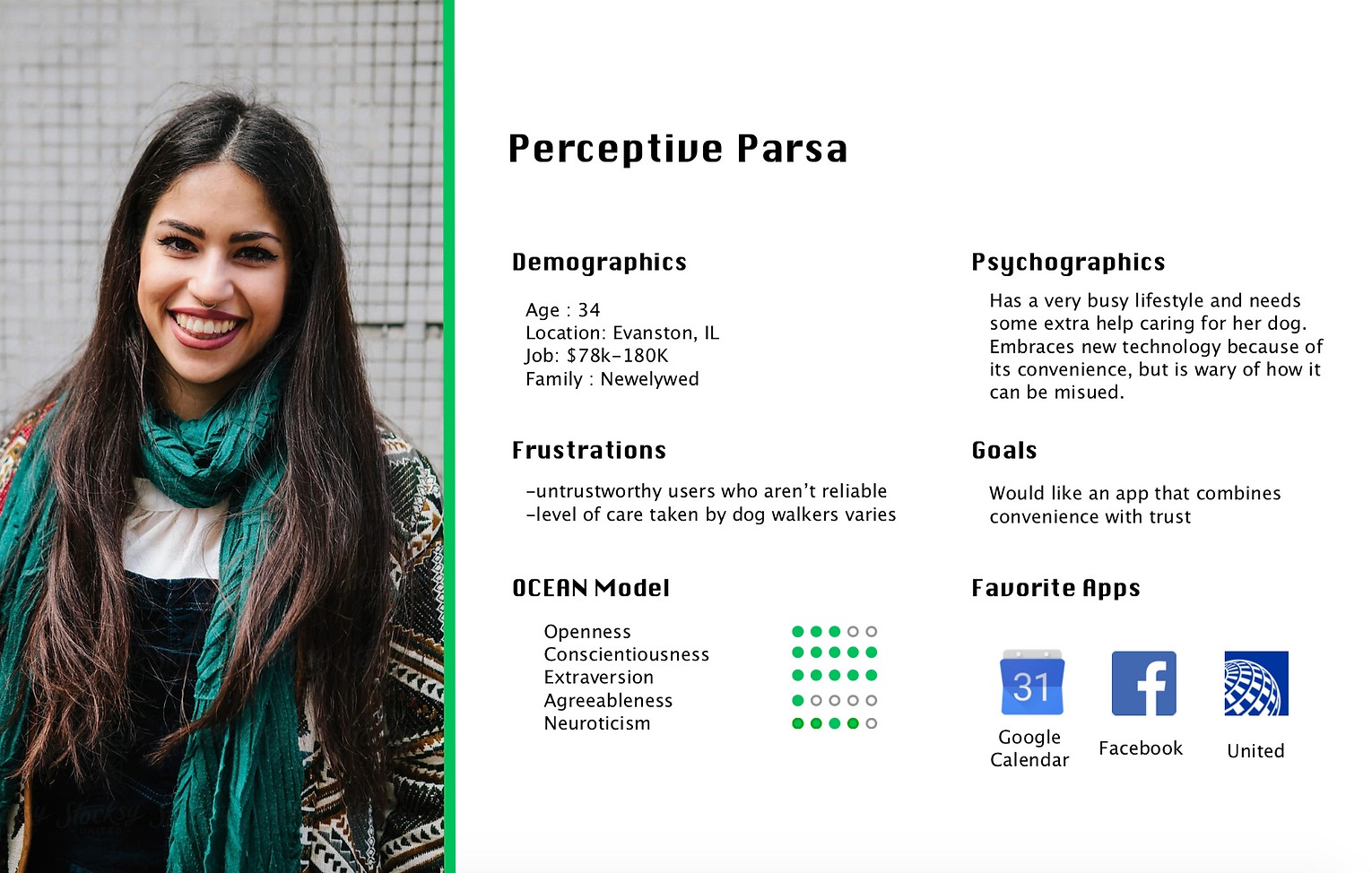
During the ideation phase of the project, I conducted two user interviews to help build a new persona and to inform the design. I needed to understand if this feature was going to be valuable to pet owners and if pet sitters would even accept their location being tracked. 1. Pet Owner Interview 2. Pet Sitter Interview Israel collected user stories in the form of online reviews on Rover, Wag!, and Reddit. He also researched the design systems of Rover's biggest competitor Wag! and compared that to features offered on Rover's platform. The biggest pain point we found was that there was an evident lack of trust between pet owners and pet sitters.
04. Relationship between entities
Building a safer pet care industry
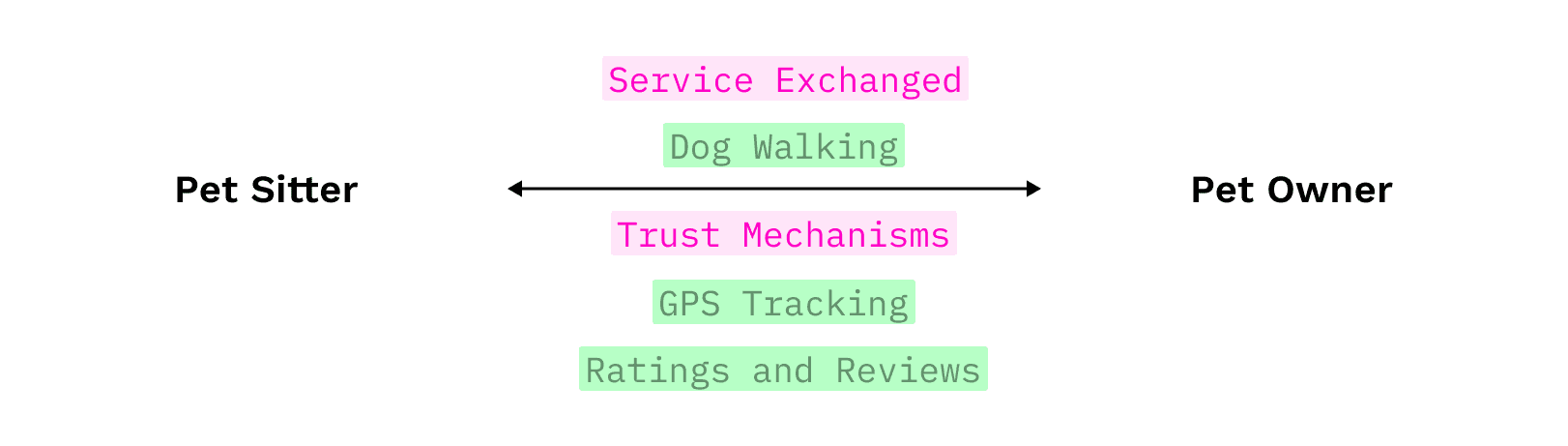
Rover is built off the sharing economy. With a GPS tracking system in place, it will foster a community-driven approach to pet care, thereby easing some of the worries of pet owners.
05. Unified modeling lanugage
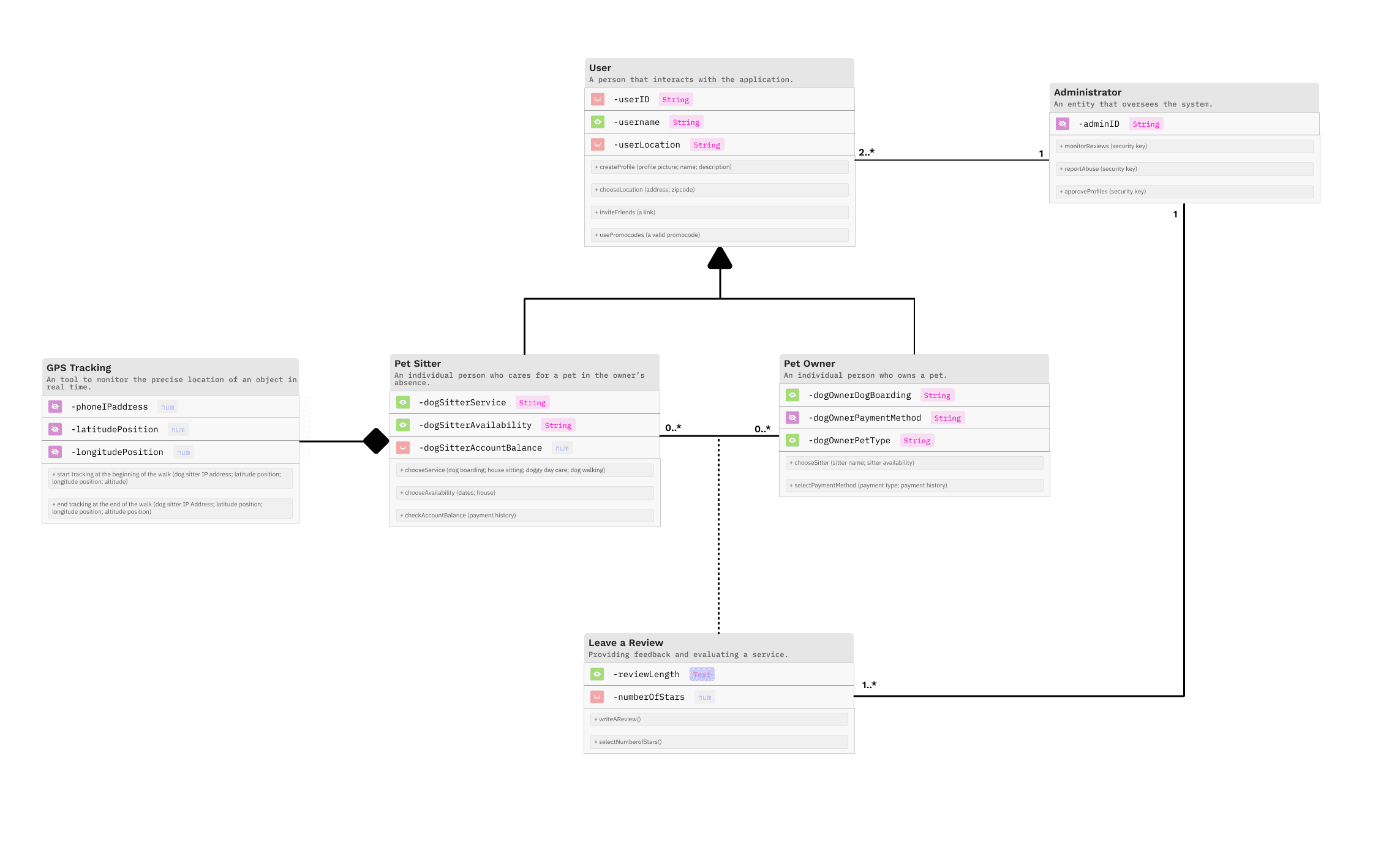
Class diagram
Assumptions
There is at least one dog sitter and one dog owner on the platformOnly the dog sitter gets their GPS trackedBoth dog sitter and dog owner leave a review. One transaction has taken place.Each dog sitter leaves a review for the dog owner, and each dog owner leaves a review for the dog sitter
Rules of the System
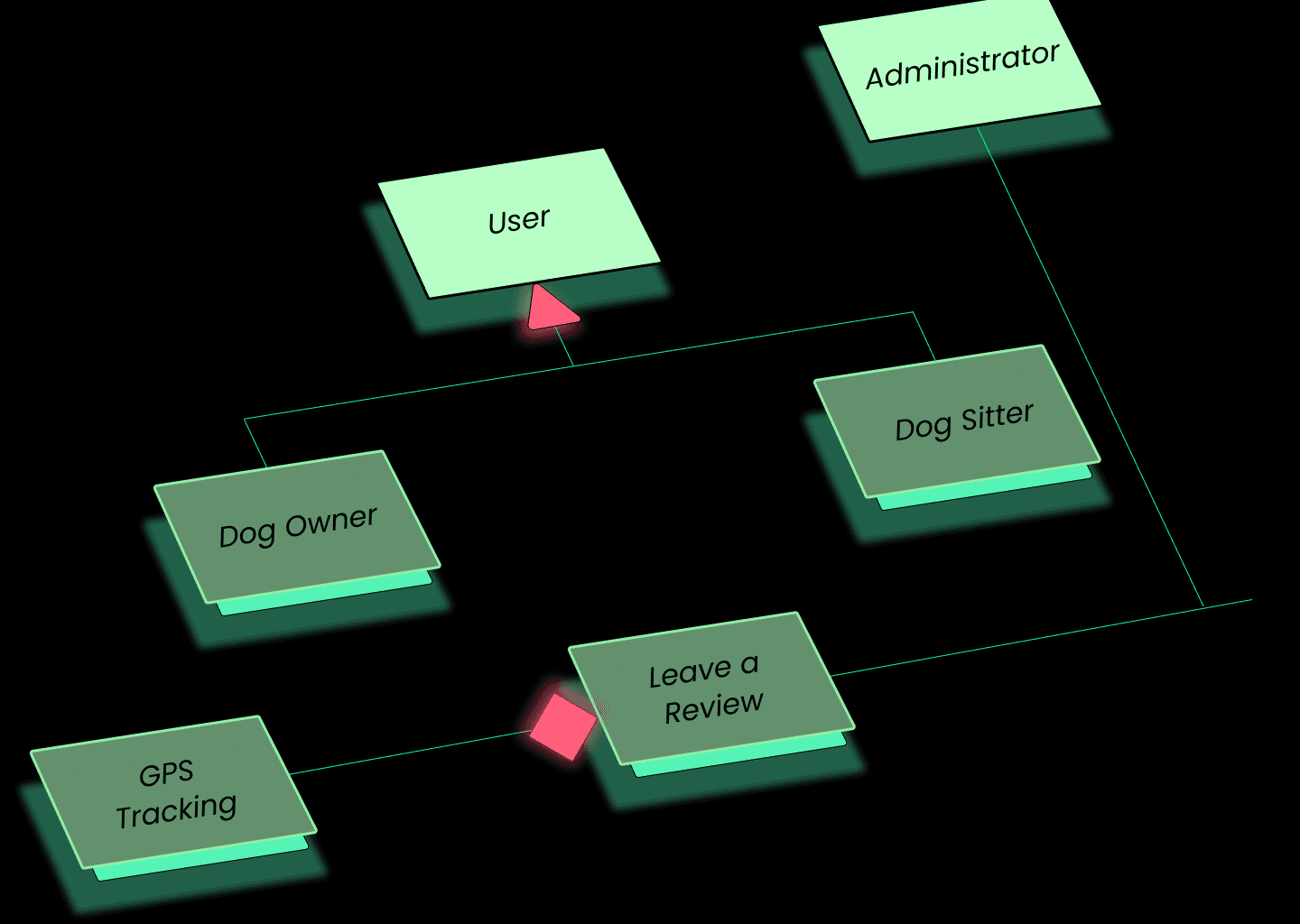
A dog sitter can sit 0 to many dogs.A dog owner can have 0 to many dog sitters.A dog sitter and dog owner are types of users.A dog sitter must turn on GPS tracking when taking a dog on a walk.The administrator monitors reviews, approves user accounts, and reports abuse.After a transaction has taken place, the dog sitter and dog owner can leave a review.
06. Flow of actions
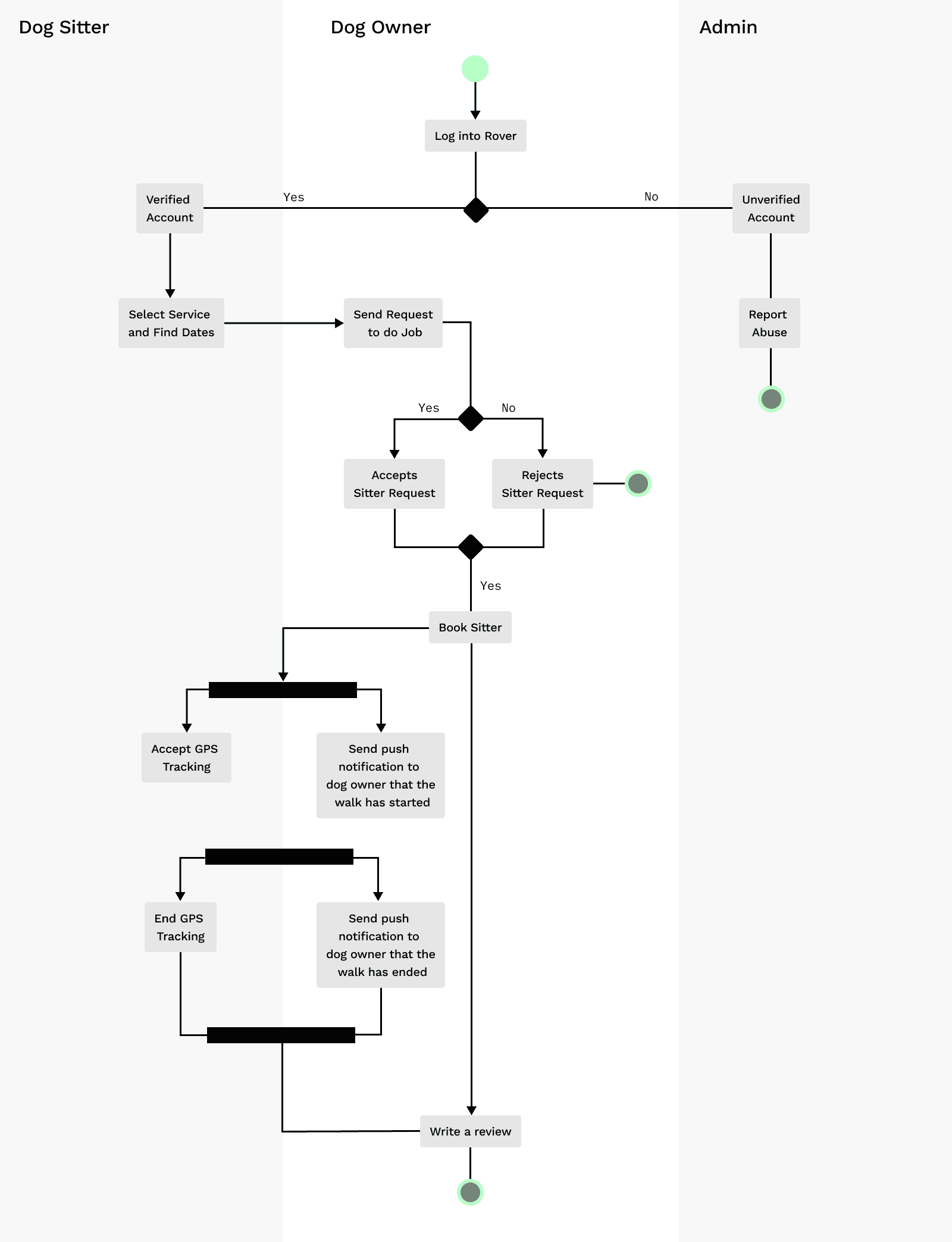
Activity diagram
This activity diagram visually maps out the flow of actions involved in tracking a dog's location in real time.
Assumptions
Assume a job is a 30 min walk (no considering dog boarding, house sitting, drop-in visit, or doggy day care).
07. Mapping key user actions and system responses
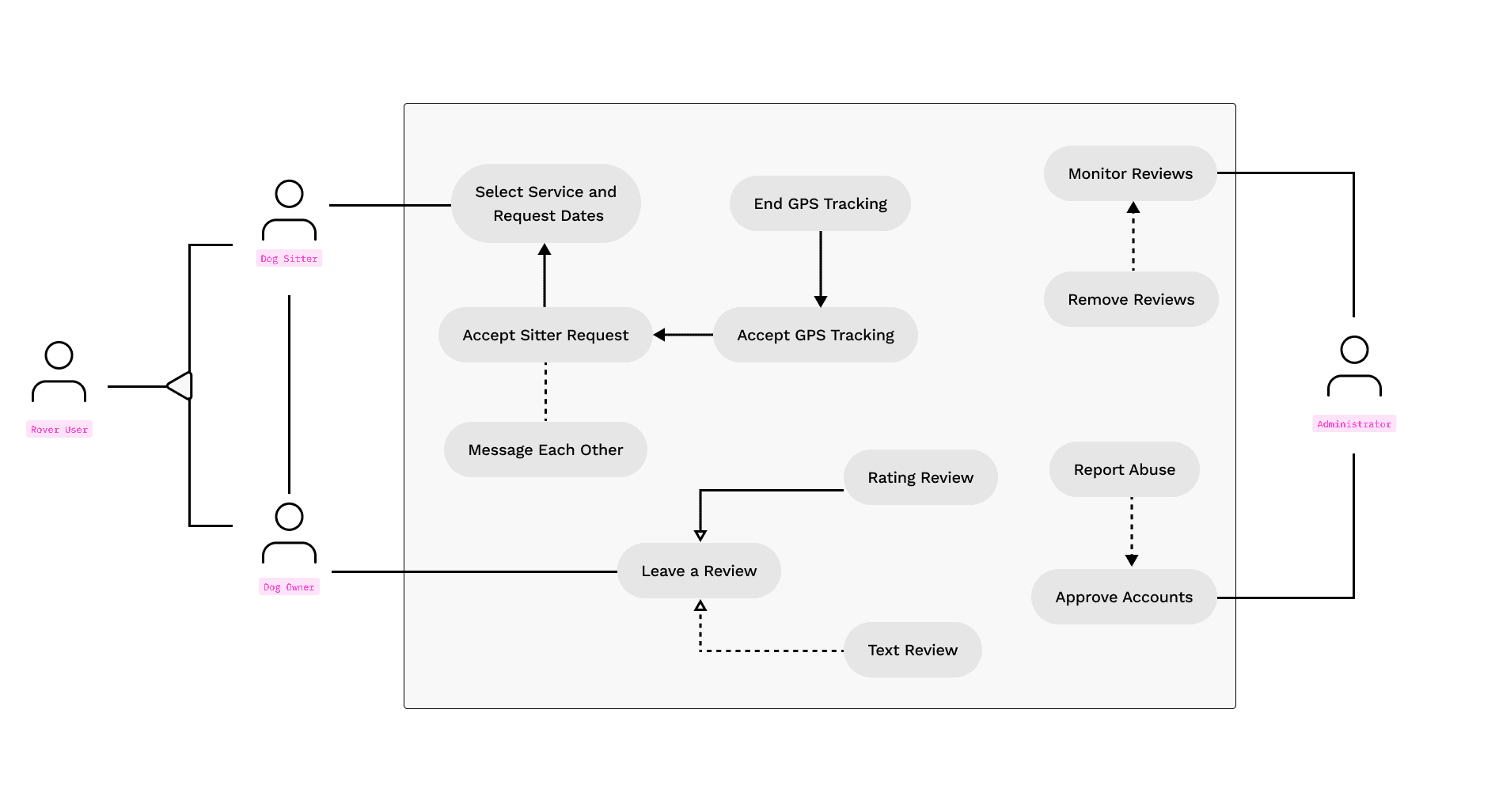
Use case diagram
Assumptions
Whenever a dog sitter takes a job, they walk the dog.The dog sitter must turn on GPS tracking when they take their dog on a walk.The dog sitter and dog owner must leave a rating review but text review is optional.The dog owner and dog sitters are approved and registered with Rover.The administrator and not the database approves accounts.
08. Messages between system components
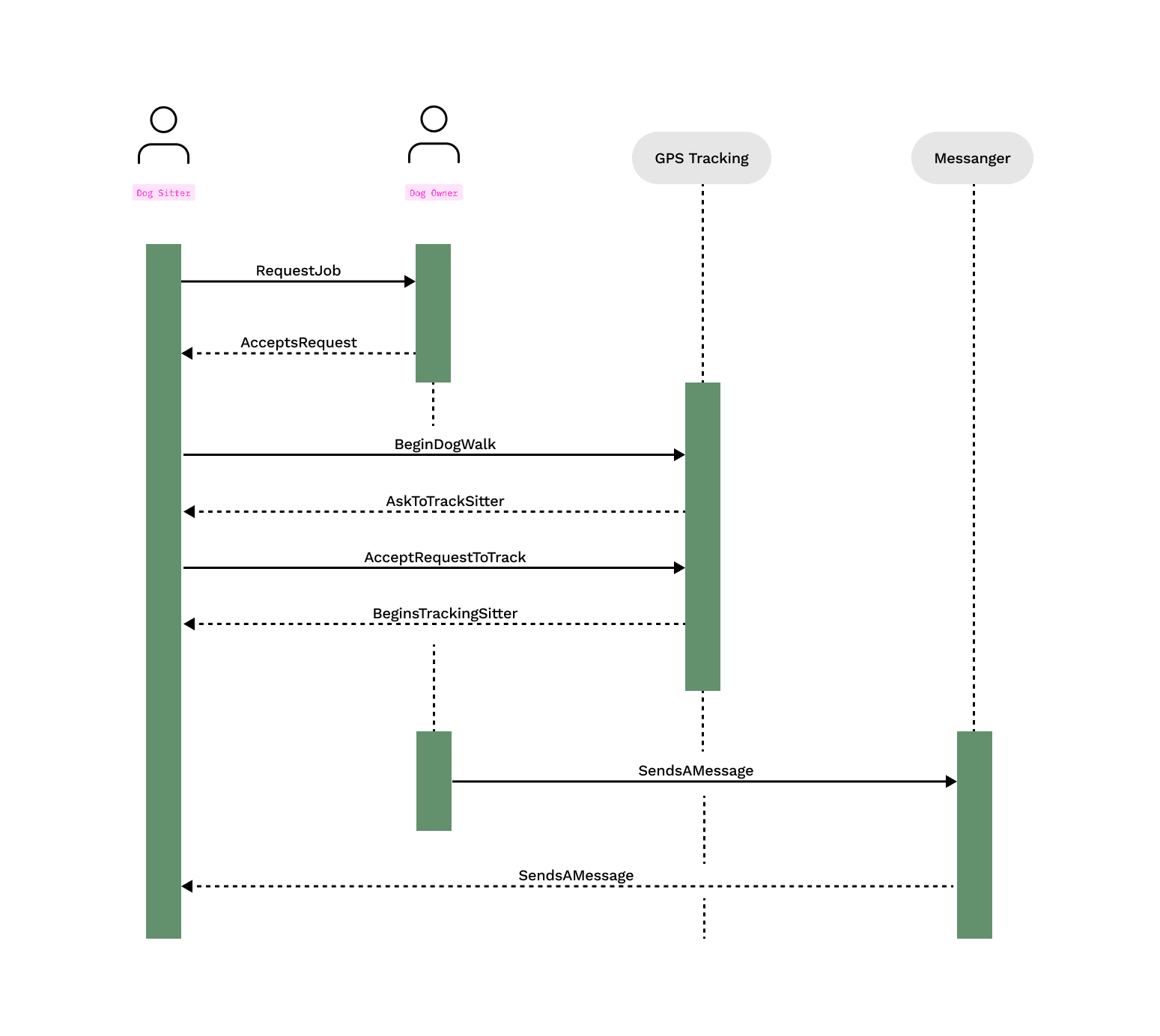
Sequence diagram
Shows the step by step interactions between system elements.
09. Modeling state transitions
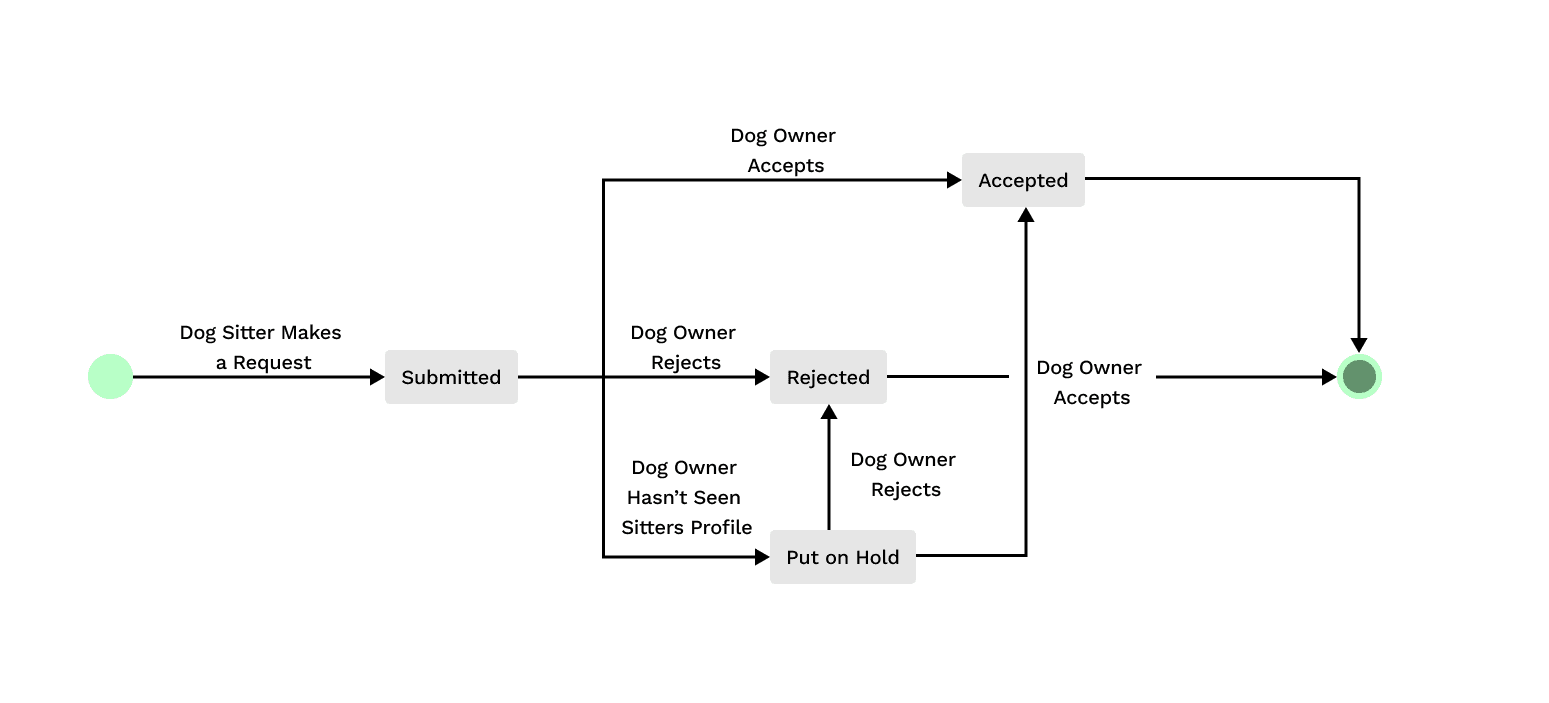
State machine
We created a state machine diagram to model the dynamic behavior of a GPS tracking system.
10 What's next?
Future considerations
We decided to take a software engineering approach to solving a design challenge by thinking through the use case diagrams, sequence diagrams, etc. Engineers think in a very logical and systematic way, something I'm not used to doing! If given more time, we would love to design screens to complement our idea. This would allow us to fully realize our idea.
11. Connecting engineering and design
Retrospective
This was an incredibly exciting project for us. I loved being able to exercise a different approach to designing that I don't normally get to practice. Software engineers work very closely with designers, and having an understanding of how they approach design problems is extremely valuable. I was also very pleased to see that Rover actually implemented a GPS tracking features shortly after we finished this side project!
